

By Meg Reynolds,
Published On 11/29/2025
Think of meditation as giving your mind a gentle rest break. Just like your body restores itself during sleep, the mind also has a built-in way to unwind and reset.
To practice meditation:
- Sit comfortably (chair or couch is fine).
- Close your eyes.
- Follow an easy technique that invites the mind to settle.
No forcing. No “doing it right.” Just allowing.
“But my mind won’t stop!” Perfect.
Busy mind? You’re normal.
Thoughts will come and go—that’s not a problem. The technique doesn’t fight thoughts; it lets them be, and in no time the nervous system naturally calms. You’ll notice your body softening, breathing easing, and that “tight” feeling starting to release.
What it feels like
People often describe a deep exhale—mentally and physically. Muscles drop their guard. The head gets clearer. You may feel more steady, kind, and awake afterward. That’s the effect of tension leaving the mind and body, and it feels incredibly good.
How I teach it
I teach this technique in four 90-minute sessions. We meet on four consecutive days so you learn step by step, practice together, and leave confident that you can do it on your own. You’ll get simple instructions for home practice and plenty of time for Q&A.
Learning from a qualified teacher removes the guesswork and makes it far easier to sustain over time.
If you’d like an overview of the tradition itself, you may enjoy What Is Vedic Meditation and How Can It Transform Your Life?
Online meditation apps (usually) don’t work
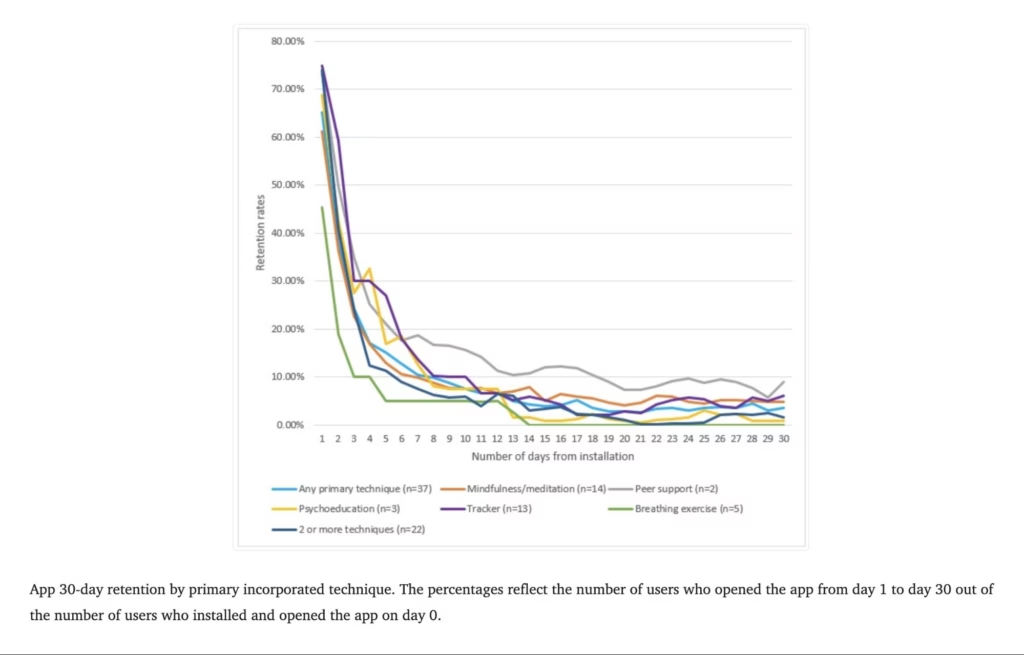
Why is in-person instruction so important? Despite the explosion of mental health relaxation and meditation apps—over 2,500 since 2015—research shows these digital tools often fall short, primarily because you are teaching yourself to meditate when using technology.
According to data researched by the National Institute of Health, user engagement with these apps drops dramatically in the first week of download (see chart below) (Baumel et al., 2019).
For more on why personal guidance matters, read Why In-Person Meditation Classes Are a Game Changer.
Who can learn
Anyone. There are no barriers for people diagnosed with ADD or ADHD—in fact, many find the structure and ease of this practice especially supportive. No prior experience, flexibility, or belief system required.
When and where to do it
Twice a day is ideal—morning and late afternoon/early evening—but even one session can make a difference. You don’t need silence or a special space; a parked car or a corner of your living room works.
Results you can expect
A calmer, clearer mind (without trying to “stop thinking”)
Better sleep and more energy
Less reactivity; more ease and focus
A steadier baseline for handling daily life
Ready to start?
If you’re curious, come to an intro and see how straightforward it is. From there, the four 90-minute sessions give you everything you need to make meditation a natural part of your day.
You don’t have to power through stress. Learn a simple technique, practice for a few minutes, and let the body and mind do what they’re designed to do—release tension and restore balance.
Reference:
Baumel, A., Muench, F., Edan, S., & Kane, J. M. (2019a). Objective user engagement with mental health apps: Systematic search and panel-based usage analysis. Journal of Medical Internet Research, 21(9). https://doi.org/10.2196/14567
Quick Recap: Your Questions Answered
Sometimes you just want the heart of it—here are the key takeaways and common questions people ask.
Not at all. Thoughts are natural in meditation. The technique works even when your mind feels busy or active.
Learning from a teacher makes the practice clearer, easier, and more sustainable—far more effective than trying to teach yourself through an app.
Anywhere. A couch, a parked car, a quiet corner—no special space required.
More calm, better sleep, improved focus, less reactivity, and a steadier emotional baseline.
Anyone. Including people with ADD or ADHD—many find it especially supportive.
P.S. Don't LET YOUR FRIENDS MISS OUT. Share this article:

Start Your Journey
Receive Expert Guidance on Meditation and Igniting Happiness
"*" indicates required fields
By submitting your information, you consent to subscribe to Meg Reynolds email list. See Privacy Policy.