

By Meg Reynolds,
Published On 08/23/2025
What Is Nervous System Regulation, Really?
If you’ve ever had a moment where someone told you to “just relax,” and your body replied with a resounding hell no, then you already know what nervous system dysregulation feels like. It’s not a mindset. It’s not something you can breathe through or white-knuckle your way out of with positive thinking. It’s a physiological condition—your body stuck in a mode it never chose in the first place.
So, what is nervous system regulation, really? Let’s start by backing up.
The Autonomic Nervous System 101 (Minus the Boring Stuff)
Your autonomic nervous system has two primary gears:
Sympathetic nervous system
This is your fight, flight, freeze, or fawn response. It mobilizes energy so you can deal with danger, conflict, or challenge. It’s useful when you need to slam on the brakes at a red light, run to catch a toddler about to topple, or meet a deadline.
Parasympathetic nervous system
This is your rest, digest, and restore mode. It helps you recover, settle, and heal after a stressful moment has passed.
In a healthy state of nervous system regulation, your body can fluidly shift between these states. You rise to meet the moment—a deadline, a toddler tantrum, a red-light runner—and then return to baseline. You recover. Your body knows how to calm itself down once the storm passes.
But when you’re dysregulated, there’s no “off” switch. You live in a chronic state of survival—amped up, hyper-vigilant, shut down, or emotionally numb. You’re not choosing it. Your body thinks it’s keeping you alive.
A Personal Story: Survival Mode, 24/7
I didn’t learn any of this in childhood. I lived it.
I grew up in a home that ran on unpredictability. My father, though a deeply intelligent man, was moody, brooding, and almost always drunk. He had a powerful presence that could shift the temperature of the room with a single look. After our mother left when I was three (my siblings were four and seven), my brother, sister, and I became satellites orbiting a broken system, each of us trying to survive in our own way.
There wasn’t a sense of emotional bonding between us—just raw survival. We were kids raising ourselves, unparented in the wildness of the 1970s. It was a time when young people were still trying to figure out what freedom even meant, and, for my mother, having a baby at 19 with an alcoholic man was a one-way ticket to pain.
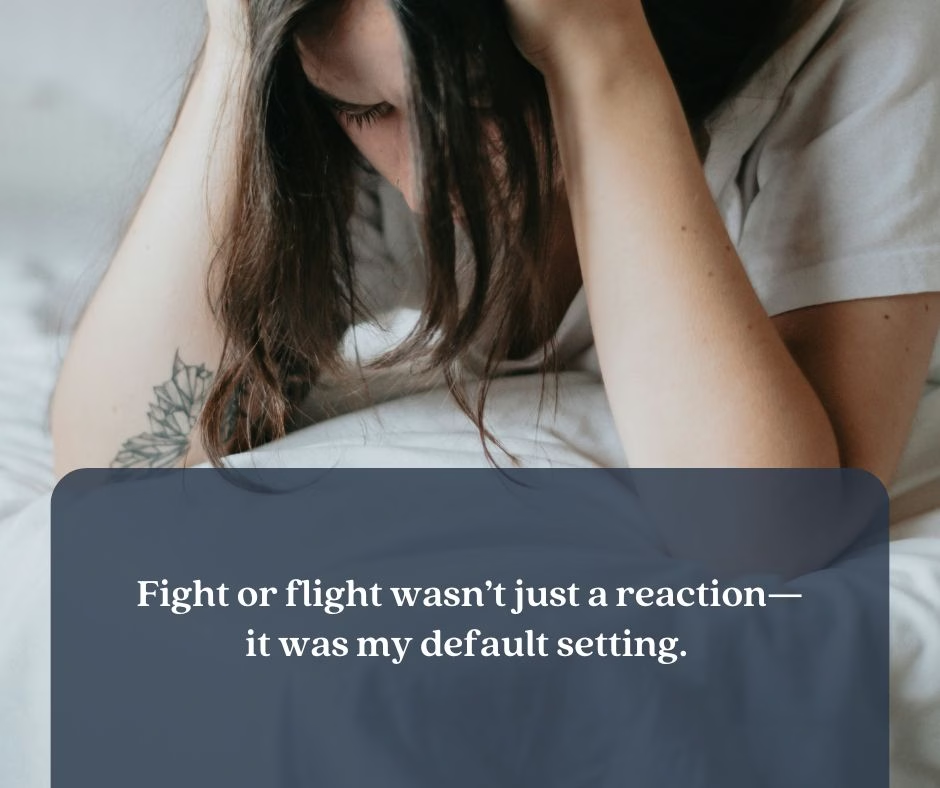
I didn’t know it then, but my nervous system was stuck in high alert. Fight or flight wasn’t just a reaction—it was my default setting. That chronic tension became my baseline, and I carried it like armor into adulthood.
My Game-Changer: Vedic Meditation
Learning Vedic Meditation didn’t fix everything overnight—but it gave me something I’d never had before: a way to settle my body, quiet my mind, and stop feeling like I was constantly bracing for impact.
With regular practice, something profound happened: I began to zoom out.
Instead of seeing my life as a series of unfortunate events, I started to see patterns. I saw the pain of my parents—two young people doing the best they could with the tools they didn’t have. I saw the way my childhood wired me for vigilance, but also for strength, depth, and compassion. I saw that I could feel peace, not because everything around me had changed, but because I had.
This is what real nervous system regulation feels like:
– You don’t get yanked around by every external trigger.
– You don’t live in a state of dread.
– You begin to trust your body again.
– You return to yourself.
And here’s the kicker: you don’t have to relive your trauma to heal from it. You just have to give your body and your mind a consistent, reliable way to reset.
What You Can Take Away
Nervous system regulation isn’t about becoming some calm, floaty version of yourself. It’s about resilience. Flexibility. Inner authority. It’s knowing that no matter what chaos is happening outside, you don’t have to match it inside.
For me, Vedic Meditation became the key to accessing that steady place. It didn’t erase my past—it reframed it. The same early life that trained me to be hyper-vigilant also trained me to be fiercely awake, empathetic, and endlessly curious about what else is possible.
And for that, I’m grateful.
If you’d like to learn how Vedic Meditation supports nervous system health, you may also enjoy:
– Stress Isn’t Supposed to Be Your Default Setting
– The Power of Mantras
Ready to Begin?
Nervous system regulation starts with giving yourself a place to reset, day after day. For me—and for many of my students—that’s Vedic Meditation.
Want to know more about how it works, or how you can begin? Book a free 15-minute intro call. I’d love to talk with you.
With love,
Meg
Quick Recap: Your Questions Answered
Sometimes you just want the heart of it—here are the key takeaways and common questions people ask.
Nervous system regulation means your body can shift smoothly between stress (fight-or-flight) and rest (recover and restore). When regulated, you rise to meet challenges and then return to balance instead of staying stuck in survival mode.
Signs include feeling constantly on edge, emotionally numb, shut down, or hyper-vigilant. It’s not a mindset problem—it’s your body locked in survival mode without an “off” switch.
Vedic Meditation gives your body a consistent way to reset. With regular practice, the nervous system learns it can stand down, creating more resilience, clarity, and calm in daily life.
No. Real healing doesn’t require rehashing painful experiences. With practices like Vedic Meditation, your body finds safety and steadiness in the present, so you can move forward with strength and peace.
P.S. Don't LET YOUR FRIENDS MISS OUT. Share this article:

Start Your Journey
Receive Expert Guidance on Meditation and Igniting Happiness
"*" indicates required fields
By submitting your information, you consent to subscribe to Meg Reynolds email list. See Privacy Policy.