

By Meg Reynolds,
Published On 09/18/2025
Emotional resilience is the ability to adapt, recover, and remain steady in the face of stress, adversity, or change.
It’s not about being unshakeable or unfazed. It’s about bouncing back—and over time, bouncing back more quickly and with greater clarity.
Resilient individuals tend to navigate life’s inevitable ups and downs with more grace and less reactivity. But emotional resilience is not something we’re either born with or without—it’s a quality we can cultivate.
This is where Vedic Meditation comes in.
The Impact of Meditation on Emotions
When we’re overwhelmed—whether by daily stressors or deeper emotional challenges—our nervous system can become overstimulated.
We may feel anxious, irritable, emotionally reactive, or just plain exhausted. Over time, this constant state of low-grade stress reduces our capacity to cope.
Vedic Meditation works directly at the level of the nervous system.
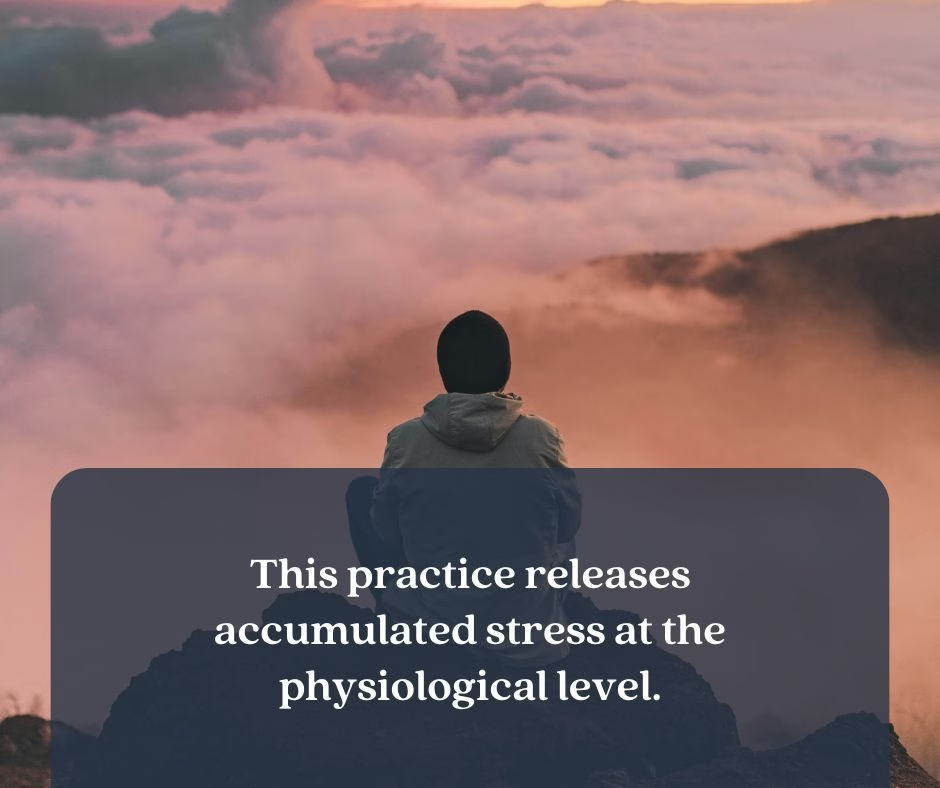
By allowing the body to settle into a deeply restful state—often deeper than sleep—this practice releases accumulated stress at the physiological level.
What does this mean for our emotions?
- We become less reactive and more responsive
- We experience greater clarity in emotionally charged situations
- We develop a steadier internal baseline, even when things feel chaotic externally
Over time, meditation begins to change not just how we feel—but how we process feeling itself.
Building Resilience through Regular Practice
One of the key benefits of practicing Vedic Meditation is that it doesn’t just help us feel better in the moment—it builds a kind of internal strength that compounds over time.
With consistent practice, the nervous system begins to normalize around a calmer, more balanced state. Stress chemistry decreases. The body repairs. The mind becomes clearer.
This physiological reset supports what we often think of as emotional resilience:
the ability to pause before reacting, to sit with discomfort, to stay grounded in uncertainty.
In other words, the kind of presence that isn’t just useful—it’s transformative.
And unlike quick-fix strategies or mental distractions, Vedic Meditation offers a foundational shift that supports us emotionally, mentally, and physically.
Real-Life Applications and Benefits
The emotional resilience that develops through meditation doesn’t just show up on the cushion.
It shows up when:
- You receive tough feedback at work—and respond with clarity rather than defensiveness
- Your child is melting down—and you don’t get pulled into the storm
- You’re navigating grief or loss—and you can stay connected to yourself throughout
- You’re in conflict—and you remember to listen first
It also supports recovery from long-term emotional strain.
People who practice Vedic Meditation consistently often report feeling:
- Less anxious and overwhelmed
- More connected and compassionate—with themselves and others
- Better equipped to handle change, stress, and uncertainty
This is the quiet power of a simple, twice-daily practice.
A Final Thought
You don’t need to wait for life to feel “out of control” to benefit from Vedic Meditation.
If you’re seeking a way to feel more grounded, more adaptable, and more emotionally steady in your day-to-day life, this practice offers a reliable path.
Emotional resilience isn’t just something you can develop—it’s something you deserve.
→ Book a FREE 15-Minute Consultation
Let’s talk about how Vedic Meditation can support you.
Quick Recap: Your Questions Answered
Sometimes you just want the heart of it—here are the key takeaways and common questions people ask.
Emotional resilience is the ability to adapt, recover, and stay grounded in the face of stress, change, or adversity. It’s not about being unshakable—it’s about bouncing back with clarity and steadiness.
Vedic Meditation allows the body to release stress at the physiological level. Over time, this creates a calmer baseline, so you can respond thoughtfully instead of reacting impulsively.
People who practice Vedic Meditation often feel less anxious and overwhelmed, more compassionate, and better able to handle life’s ups and downs with grace and perspective.
Not at all. Vedic Meditation strengthens resilience day by day, so you’re better prepared for challenges before they arrive.
P.S. Don't LET YOUR FRIENDS MISS OUT. Share this article:

Start Your Journey
Receive Expert Guidance on Meditation and Igniting Happiness
"*" indicates required fields
By submitting your information, you consent to subscribe to Meg Reynolds email list. See Privacy Policy.