

By Meg Reynolds,
Published On 12/21/2024
If you’re here, you probably already know that stress is sneaky. It shows up as tight shoulders, racing thoughts, sleepless nights, and that constant, low-grade hum of “I need to be doing more.” Sound familiar?
Now imagine if you had a reset button—a way to give your mind and body the kind of deep rest that erases that underlying buzz. Sounds nice, right? Well, that’s exactly what Vedic Meditation can do.
And here’s the best part: The science backs it up.
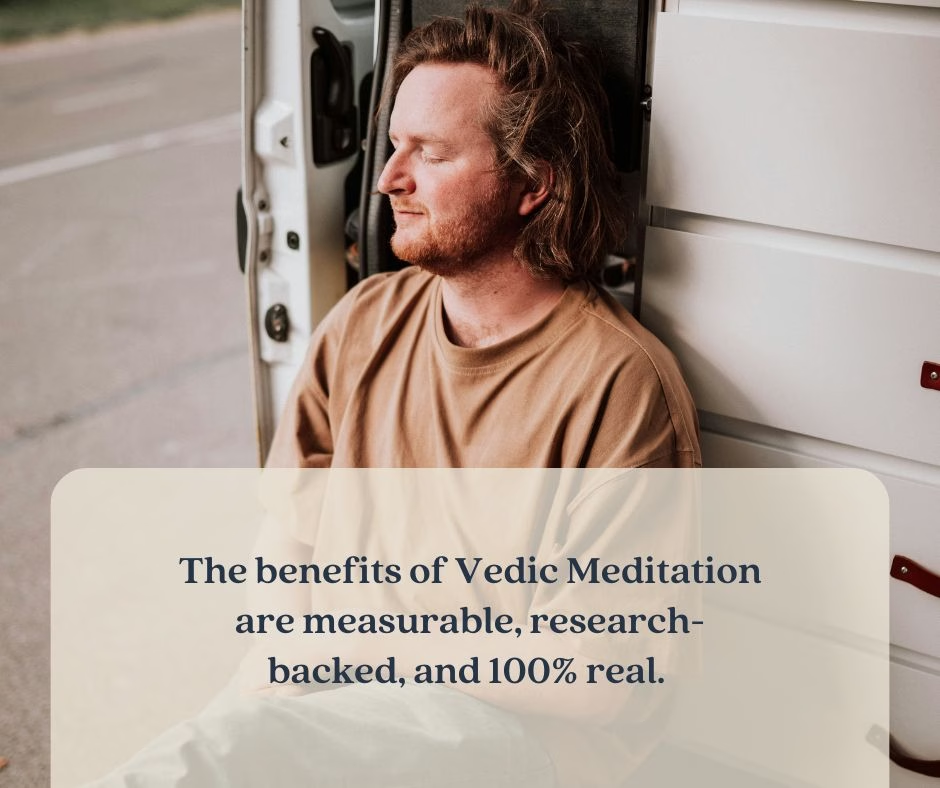
You don’t have to “believe” in meditation for it to work. The benefits of Vedic Meditation are measurable, research-backed, and 100% real. I’m talking lower cortisol (bye, stress hormone), better sleep, and sharper mental clarity.
If you like your wellness practices with a side of evidence, you’re in for a treat. Let’s dive into the science behind Vedic Meditation and why it works so well.
1. Why Is Stress Such a Big Deal, Anyway?
Let’s start with the obvious: Stress is not just “in your head.”
When you feel stressed, your brain releases cortisol and adrenaline—hormones that prepare your body to fight or flee. Your heart beats faster, your breath gets shallow, and your muscles tense up. This is great if a lion is chasing you, but not so great if it’s just another email notification.
The problem is, most of us are stuck in this “fight or flight” state all the time. In fact, 4 out of 5 doctor visits are for stress-related illnesses, and the patient usually has no idea. Chronic stress doesn’t just make you feel frazzled—it’s linked to some pretty serious health issues like:
- Heart disease
- Anxiety and depression
- Sleep disturbances
The longer you stay in this state, the more your health (and happiness) take a hit. Which brings us to…
2. How Vedic Meditation Melts Stress (Trade in Your Stress Chemistry for Bliss Chemistry!)
So, how do we get OUT of fight-or-flight mode? This is where Vedic Meditation comes in.
Unlike most relaxation techniques, Vedic Meditation creates a deep, restful state where your body switches from “fight or flight” to “rest and repair.” It’s a little like pressing the “reset” button on your nervous system.
What Happens in Your Body
When you practice Vedic Meditation, you activate the parasympathetic nervous system—the system responsible for rest, recovery, and healing. Think of it as the “off switch” for stress.
A meta-analysis published in the journal “Health Psychology Review” found that meditation practices like Vedic Meditation significantly reduce cortisol levels, which is a major marker of stress (Source: Health Psychology Review). Lower cortisol means lower stress, which leads to better sleep, more patience, and fewer moments of “Why am I crying in the car right now?”
Want to learn how to activate your “off switch” for stress? Join me for an introductory talk.
3. Trouble Sleeping? Here’s Why Meditation Is the Best Sleep Hack
Raise your hand if you’ve ever laid in bed, staring at the ceiling, replaying a conversation from 2011. Yeah, same.
One of the most life-changing benefits of Vedic Meditation is better sleep. And we’re not just talking about falling asleep faster (though that’s definitely part of it). We’re talking about deeper, more restorative sleep.
Why It Works
When you meditate, your brain gets a chance to “unpack” the stress of the day—sort of like emptying a backpack full of rocks. Without all that weight, it’s much easier to fall asleep (and stay asleep).
A study from Harvard Medical School found that meditation improves sleep quality and reduces symptoms of insomnia (Source: Harvard Health).
According to the Sleep Foundation, meditation quiets the mental “chatter” that often keeps people awake at night (Source: Sleep Foundation).
Better sleep is one of the very first reports I get from my sleepless students. On day one of the course, I teach you the simple mental technique that is Vedic Meditation, and by day two, my students show up transformed.
4. Want to Feel Sharper, Smarter, and Less Forgetful? Read This
Ever walk into a room and immediately forget why you’re there? Yeah, that’s “brain fog” at its finest.
Here’s How It Works
Meditation increases activity in the prefrontal cortex (the part of your brain responsible for decision-making, focus, and self-control). It also quiets the Default Mode Network (DMN)—the part of your brain responsible for mind-wandering.
A study from Harvard University found that regular meditation increases grey matter in areas of the brain associated with learning, memory, and emotional regulation (Source: Harvard Gazette).
5. The Benefits Aren’t Just “In Your Head” (They’re in Your Body, Too)
We’ve talked about mental clarity and better sleep, but here’s something you may not know: Meditation improves physical health, too.
The Science Behind It
- Lowers Blood Pressure: Regular meditation reduces systolic and diastolic blood pressure, as confirmed by multiple studies published by the American Heart Association (Source: AHA Journals).
- Boosts Immunity: Meditation increases the activity of natural killer cells (the ones that fight infections), according to the National Center for Complementary and Integrative Health (NCCIH) (Source: NCCIH).
Final Thoughts: Science Says It Works (Now See for Yourself)
If you’ve been waiting for “proof” before you give meditation a try, you just got it. From lower stress to better sleep and sharper focus, the research from Harvard, the NIH, and the APA all agree: Vedic Meditation works.
If you’re ready to experience these benefits for yourself, I invite you to join me for a Vedic Meditation course. I’ll teach you everything you need to know, guide you step-by-step, and help you turn this life-changing practice into a daily habit.
P.S. Don't LET YOUR FRIENDS MISS OUT. Share this article:

Start Your Journey
Receive Expert Guidance on Meditation and Igniting Happiness
"*" indicates required fields
By submitting your information, you consent to subscribe to Meg Reynolds email list. See Privacy Policy.