

By Meg Reynolds,
Published On 03/02/2026
And Vedic Meditation Offers a Way Back
Stress levels in the United States are rising, and most of us don’t need a chart to confirm it.
We feel it.
In the tight shoulders.
The racing mind at 3 a.m.
The gut that won’t settle.
The headaches that arrive like a knock at the door.
The emotional hair-trigger exhaustion that makes even small things feel enormous.
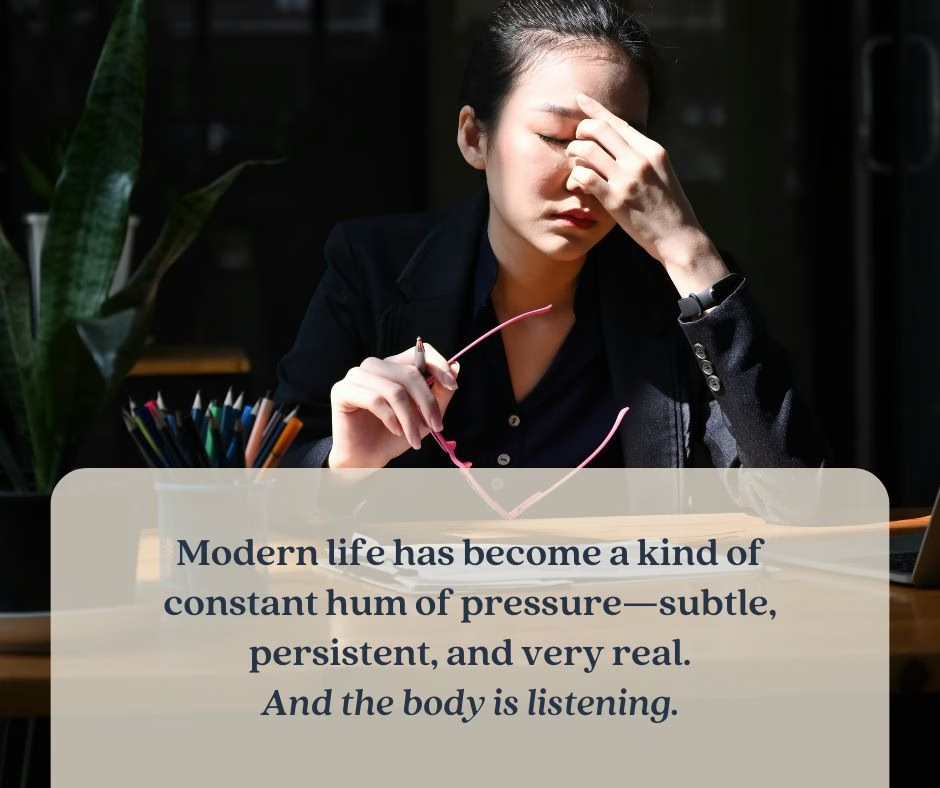
Modern life has become a kind of constant hum of pressure—subtle, persistent, and very real.
And the body is listening.
Stress Isn’t Just a Feeling — It’s Biology
Stress is not simply an emotional inconvenience.
It is a physiological event.
When stress accumulates in the nervous system, it affects everything downstream:
- mood
- sleep
- digestion
- immune function
- inflammation
- clarity and cognition
Research suggests that 60–80% of primary care visits may have a stress-related component, meaning stress often sits quietly underneath what brings people into the doctor’s office in the first place.
Stress commonly shows up as:
- chronic fatigue
- migraines
- burnout
- anxiety and depression
- gut disorders
- pain syndromes
Stress doesn’t stay politely in your calendar.
It enters your chemistry.
The Nervous System Was Never Meant to Brace Forever
The human body was designed to move between stress and recovery.
But modern life keeps us locked in “on” mode:
Alert. Performing. Coping. Responding.
The issue isn’t that stress exists.
The issue is that many of us never fully discharge it.
Over time, that buildup becomes a kind of invisible weight—until it becomes visible as illness.
If this resonates, you may also want to read Living in Survival Mode? Here’s How to Reset.
Why Vedic Meditation Is Different
Vedic Meditation is an ancient mental technique that allows the mind to settle effortlessly inward, creating a deeply restorative state of rest.
It isn’t concentration.
It isn’t monitoring your thoughts.
It isn’t “trying to be calm.”
It’s a natural process that gives the nervous system a rare opportunity:
to release accumulated stress at the cellular level.
Studies show meditation can reduce stress hormones such as cortisol and support healthier nervous system regulation. That’s why people often report improvements in:
- emotional stability
- sleep quality
- digestion
- resilience under pressure
- clarity and ease
Meditation isn’t escapism.
It’s biology.
It’s the body finally exhaling.
For a deeper look at how meditation supports emotional resilience, you may appreciate this article on Vedic Meditation and emotional resilience.
A Story From My Own Life
When I first started learning to meditate, I was living in San Francisco and working in the Financial District.
At the time, I owned and operated four upscale shoeshine and shoe repair parlors—high-end craftsmanship for high-end customers.
We weren’t just polishing shoes.
We were artists: shoe dyeing, shoe tattooing, restoring beloved footwear—Jimmy Choo, John Lobb, Church’s… even renovating luxury leather recovered from a sunken ship and passed down for generations.
It was beautiful work.
And it was intense.
At that point, I’d been meditating daily for a couple of years, and the progress in my stress reactivity was enormous…
…but I could still flip out once in a while.
I remember standing in line at Peet’s Coffee one day, waiting patiently for my turn.
The barista looked right past me and took the order of the man behind me.
A simple oversight.
No big deal.
Except my nervous system thought it was a betrayal of civilization.
I took wild offense.
I let the barista have it.
I let the man behind me have it.
I basically launched a one-woman protest over coffee-line justice.
Looking back, it wasn’t about the coffee.
It was stress looking for an exit ramp.
What Changed Over Time
Fast forward to recently: I was at the airport in New Delhi, India, where there is… let’s call it… a creative relationship with standing in line.
Two unrelated would-be line cutters flanked me on either side as we approached security.
And something remarkable happened.
I noticed:
I wasn’t in a hurry.
I had three hours before my flight.
So I let them pass.
No fuss.
No spike.
And what was even more striking…
I felt at ease.
I could recognize their agitation, relate to it…
…but I hadn’t lived in that internal climate in a long time.
That is what consistent meditation does.
It doesn’t make life perfect.
It makes you less braced.
Less reactive.
More free inside your own nervous system.
Stress Is Rising — So Our Practices Matter More Than Ever
As stress-related illness becomes increasingly common, the most powerful tools may be the ones that help us release overload before it becomes breakdown.
Vedic Meditation is one of the simplest and most ancient ways I know to support the nervous system—not through effort, but through rest.
You don’t need to wait until you’re falling apart to begin.
You can begin now.
One settling.
One exhale.
One return.
A Gift to Support Your Nervous System
If you’d like a gentle place to start, I’d love to share my favorite free mindfulness resource:
✨ A free PDF: “Prioritize Joy to Boost Productivity”
A simple tool to help you create more spaciousness, clarity, and ease—starting today.
Because joy is not a reward for finishing your life.
Joy is fuel.
And your nervous system deserves it.
Quick Recap: Your Questions Answered
Quick Recap: Your Questions Answered
Modern life keeps many people in a constant state of stimulation and performance, without adequate recovery. Over time, that stress accumulates in the nervous system.
Chronic stress impacts mood, sleep, digestion, immune function, inflammation, and cognitive clarity. It becomes a physiological issue, not just an emotional one.
Research suggests certain forms of meditation can reduce stress hormones like cortisol and support healthier nervous system regulation.
Vedic Meditation is effortless and doesn’t require concentration. It allows the nervous system to enter deep rest, where accumulated stress can release naturally.
Feeling constantly “on,” reactive, tired-but-wired, or emotionally hair-trigger can all indicate accumulated stress in the nervous system.
P.S. Don't LET YOUR FRIENDS MISS OUT. Share this article:

Start Your Journey
Receive Expert Guidance on Meditation and Igniting Happiness
"*" indicates required fields
By submitting your information, you consent to subscribe to Meg Reynolds email list. See Privacy Policy.