Article
What Does the Bible Say About Meditation—and How It Can Complement Vedic Meditation?
Category:

By Meg Reynolds,
Published On 12/17/2025
Many people of faith ask whether meditation is compatible with a biblical life. Short answer: yes. The Bible speaks positively about meditation—dwelling on God, His word, and His works—and a daily practice like Vedic Meditation (VM) can actually make your prayer and scripture time more grounded, attentive, and heartfelt.
Meditation in the Bible (plain and simple)
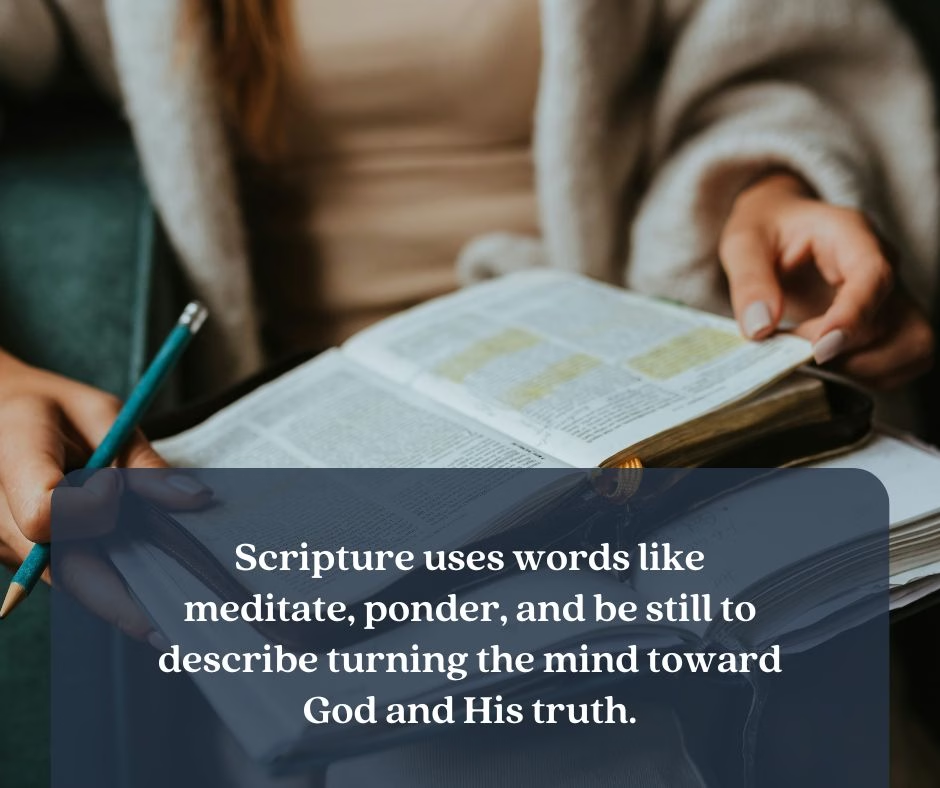
Scripture uses words like meditate, ponder, and be still to describe turning the mind toward God and His truth.
“Be still, and know that I am God.” — Psalm 46:10
“May the words of my mouth and the meditation of my heart be pleasing…” — Psalm 19:14
“This Book of the Law shall not depart from your mouth, but you shall meditate on it day and night…” — Joshua 1:8
“His delight is in the law of the Lord, and on his law he meditates day and night.” — Psalm 1:2
Across these passages, meditation isn’t portrayed as exotic or off-limits; it’s encouraged as a way to steady the mind and align the heart.
How Vedic Meditation fits (and why it helps)
Vedic Meditation is a 5,000+ year old, simple mental technique. It predates organized religion, so it’s not a religious practice and doesn’t require any belief system to work. In VM, you sit comfortably with eyes closed and use a personalized sound in an easy, effortless way.
There’s no concentration or controlling thoughts; the mind naturally settles, the body releases tension, and you emerge more present.
If you want a primer on the technique itself, you may like How to Meditate (The Simple Way).
Why does VM pair well with a life of faith?
Quieter mind → deeper prayer. When the nervous system settles, distraction softens. Many students find their prayer and scripture study feel clearer and more receptive after VM.
Less reactivity → more Christ-like conduct. Regular deep rest supports patience, kindness, and self-control in day-to-day life.
No props, apps, or beliefs required. VM is a technique, not a theology. You keep your faith exactly as it is; VM simply helps you bring a calmer mind to it.
“Is a mantra a religious word?”
In VM, the sound you learn isn’t an object of worship; it’s a gentle mental tool that helps the mind settle. Think of it like a neutral aid to quiet the noise—not a statement of belief.
For more on how these sounds work, you may enjoy Mantras Aren’t Just Sounds—They’re the Heart of Meditation.
What VM looks like in practice
Twenty minutes, twice a day. Easy to fit before breakfast and late afternoon/evening.
Learned once, used for life. I teach VM in four 90-minute sessions. After that, you have a lifetime practice. I’m always available for support, group meditations, and advanced knowledge, but you won’t be dependent on recordings or apps.
If you want to understand the support piece, here’s more on what lifelong connection looks like after learning VM.
The felt sense: why it’s so encouraging
As tension releases from the mind and body, people often describe feeling physically lighter and mentally clearer. That refreshed, unburdened state makes it easier to show up for God, family, and community with attention and warmth.
If you’re a person of faith who wants a non-religious, easy-to-learn technique that supports (not replaces) prayer and scripture, Vedic Meditation is a beautiful fit. Learn it once, practice simply, and bring a calmer, more open heart to the things that matter most.
Quick Recap: Your Questions Answered
Sometimes you just want the heart of it—here are the key takeaways and common questions people ask.
Yes. Scripture frequently encourages meditation, stillness, and reflection as ways to connect with God and align the heart.
No. VM is non-religious, belief-optional, and compatible with any faith tradition.
In VM, the sound isn’t a religious symbol or object of worship. It’s simply a gentle mental tool that helps the mind settle.
Many people find that a calmer mind and regulated nervous system help them pray with more focus, presence, and emotional steadiness.
Through four 90-minute sessions taught over four days. After that, you have a lifelong practice with optional support.
P.S. Don't LET YOUR FRIENDS MISS OUT. Share this article:

Start Your Journey
Receive Expert Guidance on Meditation and Igniting Happiness
"*" indicates required fields
By submitting your information, you consent to subscribe to Meg Reynolds email list. See Privacy Policy.